

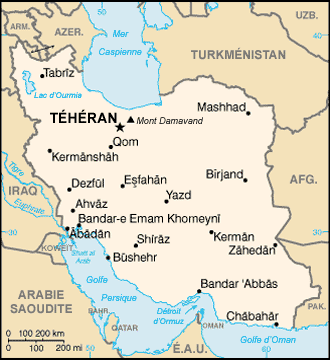
Dernière mise à jour du 29 juin 2025. Journal Le Monde. “Dans une interview diffusée dimanche, Rafael Grossi, directeur de l’Agence internationale de l’énergie atomique, estime que les bombardements américains sur les sites nucléaires iraniens de Fordo, Natanz et Ispahan ont causé des « dommages importants mais pas complets”.
Des rapports « absurdes », dénonce l’émissaire américain pour le Moyen-Orient
“Comme Donald Trump, l’émissaire américain pour le Moyen-Orient, Steve Witkoff, a affirmé mardi sur Fox News que dans les trois sites nucléaires ciblés en Iran, « la plupart, sinon la totalité, des centrifugeuses ont été endommagées ou détruites de telle sorte qu’il sera presque impossible de relancer le programme ».
« Nous avons largué douze bombes antibunker sur Fordo. Il ne fait aucun doute qu’elles ont percé la surface… et il ne fait aucun doute que tout a été détruit. Par conséquent, les rapports qui suggèrent que nous n’avons pas atteint notre objectif sont complètement absurdes ! », a ajouté M. Witkoff.”
Le président américain s’en est pris à CNN et au « New York Times » qui, sur la base d’un rapport préliminaire confidentiel du renseignement américain, ont annoncé que les bombardements sur tallations de Fordspahan n’ont pas éliminé toutes les centrifugeuses ou les stocks d’uranium enrichiiranien.
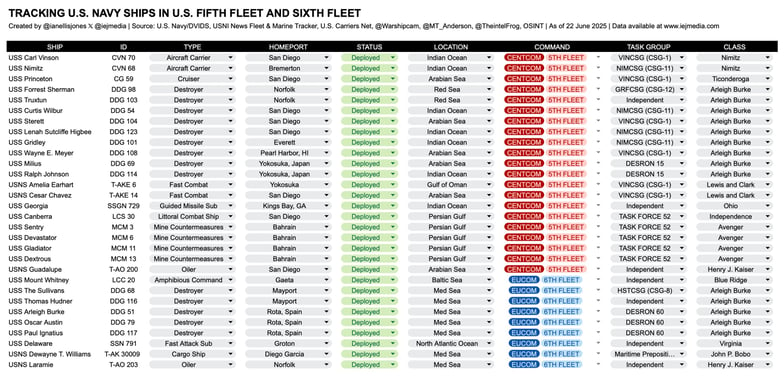
Quelques sources parmi d’autres.
DOD Rapid Response @DODResponse
Department of Defense @DeptofDefense
United States Strategic Command @US_STRATCOM
Transcript
Secretary of Defense Pete Hegseth and Chairman of the Joint Chiefs of Staff General Dan Caine Hold a Press Conference
June 22, 2025
SECRETARY OF DEFENSE PETE HEGSETH: Well, thank you for joining us this morning. Last night, on President Trump's orders, US Central Command conducted a precision strike in the middle of the night against three nuclear facilities in Iran, Fordow, Natanz and Esfahan, in order to destroy or severely degrade Iran's nuclear program, and as The Chairman of the Joint Chiefs will demonstrate it was an incredible and overwhelming success. The order we received from our commander in chief was focused. It was powerful, and it was clear. We devastated the Iranian nuclear program. But it's worth noting the operation did not target Iranian troops or the Iranian people. For the entirety of his time in office, President Trump has consistently stated, for over 10 years, that Iran must not get a nuclear weapon, full stop. Thanks to President Trump's bold and visionary leadership and his commitment to peace through strength, Iran's nuclear ambitions have been obliterated.
Many presidents have dreamed of delivering the final blow to Iran's nuclear program, and none could, until President Trump. The operation President Trump planned was bold and it was brilliant, showing the world that American deterrence is back. When this President speaks, the world should listen and the U.S. Military, we can back it up. The most powerful military the world has ever known. No other country on planet Earth could have conducted the operation that the chairman is going to outline this morning. Not even close. Just like Soleimani found out in the first term Iran found out when POTUS says 60 days that he seeks peace and negotiation, he means 60 days of peace and negotiation otherwise that nuclear program, that nuclear capability, will not exist. He meant it. This is not the previous administration. President Trump said, no nukes. He seeks peace, and Iran should take that path. He sent out a Truth last night, saying this: any retaliation by Iran against the United States of America will be met with force far greater than what was witnessed tonight, signed the President of the United States, Donald J Trump. Iran would be smart to heed those words. He said it before, and he means it.
I want to give recognition to the Chairman of the Joint Chiefs of Staff, the Joint Staff, General Eric Kurilla at CENTCOM, who did a phenomenal job. He and his staff, all of CENTCOM. Policy across the board. This was a joint effort, and across the Pentagon effort, I want to recognize the pilots who flew those bombers, who flew those fighters, who flew those refuelers. Warriors. I want to recognize the sailors on those destroyers, in those subs, on those carriers. Warriors, all of them. I want to recognize our soldiers doing air defense, base defense, QRF (quick reaction force) warriors, all of them, every American involved in this operation, performed flawlessly. And I want to give recognition to our allies in Israel as well. This is a plan that took months and weeks of positioning and preparation so that we could be ready when the President of the United States called. It took a great deal of precision. It involved misdirection and the highest of operational security. Our B-2s went in and out of downtown Tehran, not Tehran, excuse me, of these nuclear sites in and out and back without the world knowing at all. In that way, it was historic, a strike that included the longest B-2 Spirit bomber mission since 2001 and the first operational employment of the MOP, a massive ordinance penetrator. The mission demonstrated to the world the level of joint and allied integration that speak to the strength of our alliance and our joint forces. As President Trump has stated, the United States does not seek war, but let me be clear, we will act swiftly and decisively when our people, our partners or our interests are threatened. Iran should listen to the President of the United States and know that he means it, every word. I want to give congratulations to our commander in chief. It was an honor to watch him lead last night and throughout and to our great American warriors on this successful operation. God bless our troops. God bless America, and we give glory to God for his providence and continue to ask for his protection. I turn it over now to the chairman for specifics.
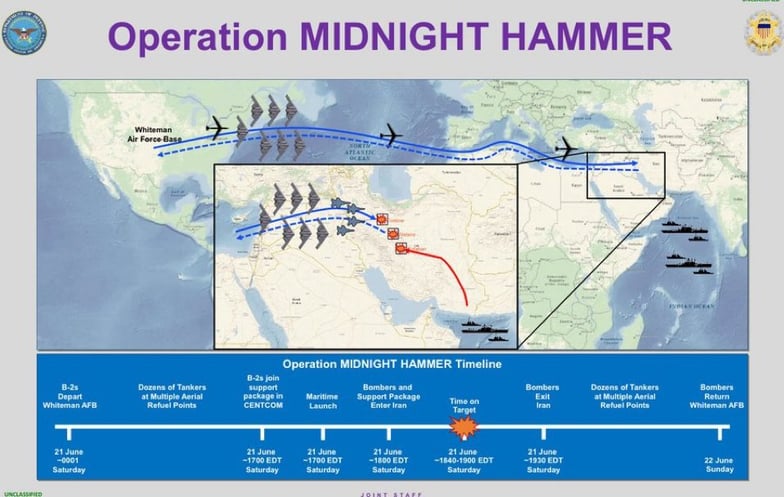
GENERAL DAN CAINE: Thank you, Mr. Secretary, thanks for recognizing all of our folks out there doing our nation's work. And nice to see everybody on this early Sunday morning. Last night, on the President's orders, US Central Command, under the command of General Eric Kurilla, executed Operation Midnight Hammer, a deliberate and precise strike against three Iranian nuclear facilities. This was a complex and high-risk mission carried out with exceptional skill and discipline by our joint force. I want to thank every service member, planner, operator, that made this mission possible. Their actions reflect the highest standards of the United States Armed Forces. This operation was designed to severely degrade Iran's nuclear weapons infrastructure. It was planned and executed across multiple domains and theaters with coordination that reflects our ability to project power globally with speed and precision at the time and place of our nation's choosing. This was a highly classified mission with very few people in Washington knowing the timing or nature of this plan. I'll refer you to the graphic on the side as I walk you through some of the operational details.
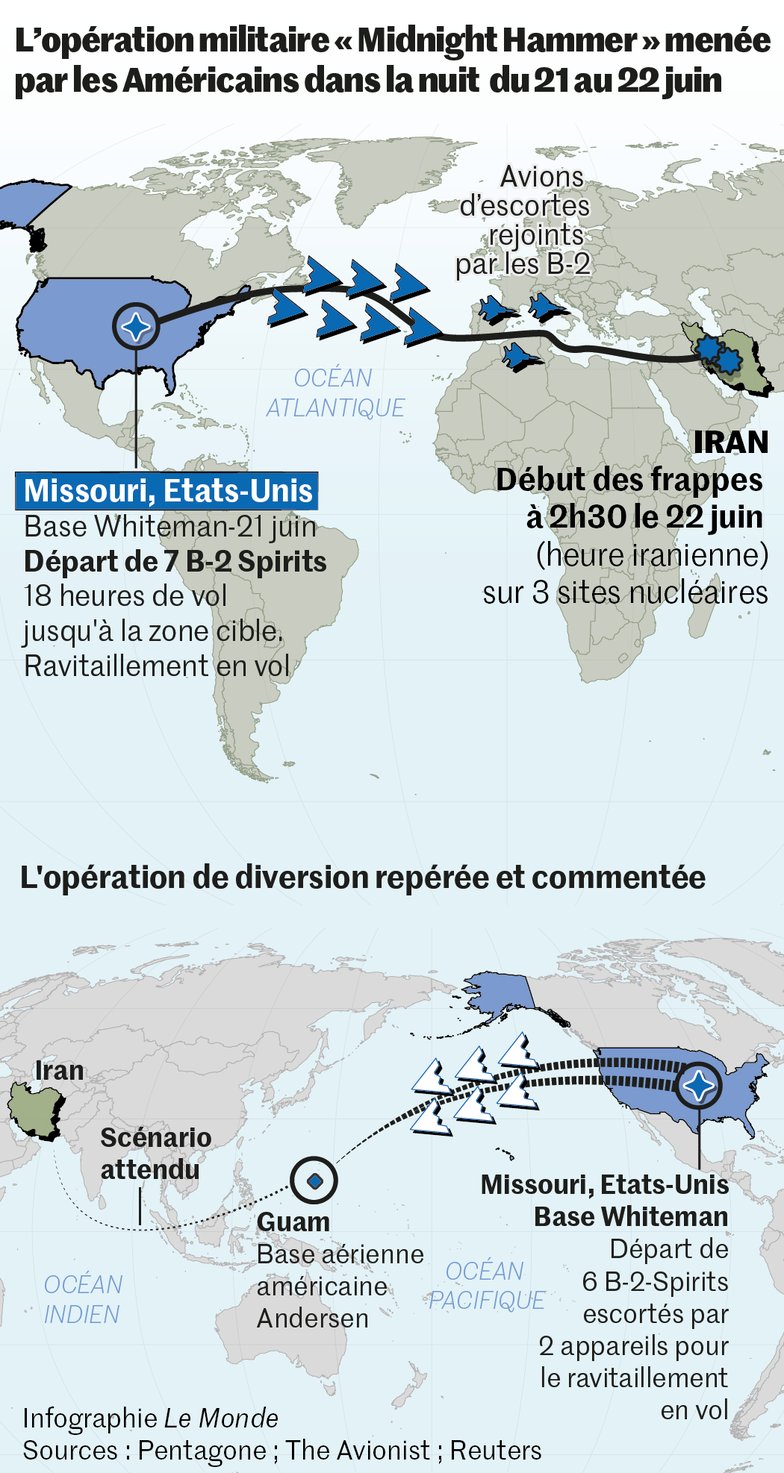
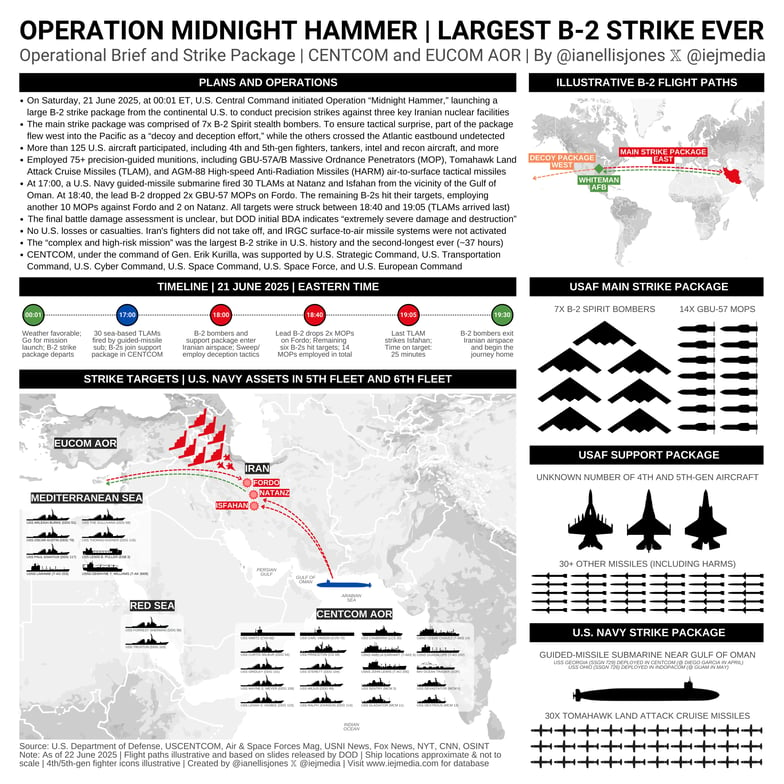
At midnight Friday into Saturday morning, a large B-2 strike package comprised of bombers launched from the continental United States. As part of a plan to maintain tactical surprise, part of the package, proceeded to the west and into the Pacific as a decoy. A deception effort known only to an extremely small number of planners and key leaders here in Washington and in Tampa. The main strike package comprised of seven B-2 Spirit bombers, each with two crew members, proceeded quietly to the east with minimal communications. Throughout the 18-hour flight into the target area, the aircraft completed multiple in-flight refuelings. Once over land, the B-2s linked up with escort and support aircraft in a complex, tightly timed maneuver requiring exact synchronization across multiple platforms in a narrow piece of airspace, all done with minimal communications.
This type of integration is exactly what our Joint Force does better than anyone else in the world. At approximately 5 p.m. Eastern Standard Time last night, and just prior to the strike package entering Iran, a U.S. submarine in the Central Command Area of Responsibility launched more than two dozen Tomahawk land attack cruise missiles against key surface infrastructure targets at Esfahan. As the Operation Midnight Hammer strike package entered Iranian airspace, the U.S. employed several deception tactics, including decoys as the fourth and fifth generation aircraft pushed out in front of the strike package at high altitude and high speed, sweeping in front of the package for enemy fighters and surface to air missile.
The strike package was supported by U.S. Strategic Command, U.S. Transportation Command, U.S. Cyber Command, U.S. Space Command, U.S. Space Force and U.S. European command. As the strike package approached Fordow and Natanz, the U.S. protection package employed high speed suppression weapons to ensure safe passage of the strike package with fighter assets employing preemptive suppressing fires against any potential Iranian surface to air threats.
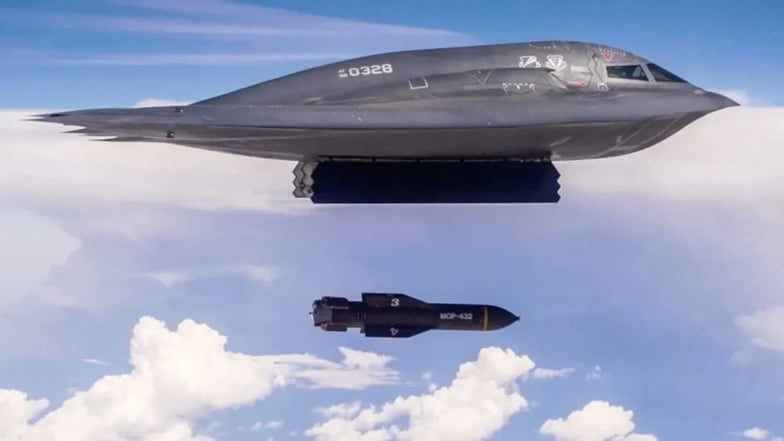
We are currently unaware of any shots fired at the U.S. strike package on the way in. At approximately 6:40 p.m. Eastern Standard Time, 2:10 a.m. Iran time, the lead B-2 dropped two GBU-57 Massive Ordnance Penetrator weapons on the first of several aim points at Fordow. As the President stated last night, the remaining bombers then hit their targets as well, with a total of 14 MOPs dropped against two nuclear target areas. All three Iranian nuclear infrastructure targets were struck between 6:40 p.m. and 7:05 p.m. Eastern time again. That's about 2:10 in the morning, local time in Iran. With the Tomahawk missiles being the last to strike at Esfahan to ensure we retain the element of surprise throughout the operation. Following weapons release, the Midnight Hammer strike, package exited Iranian airspace, and the package began its return home. We are unaware of any shots fired at the package on the way out.
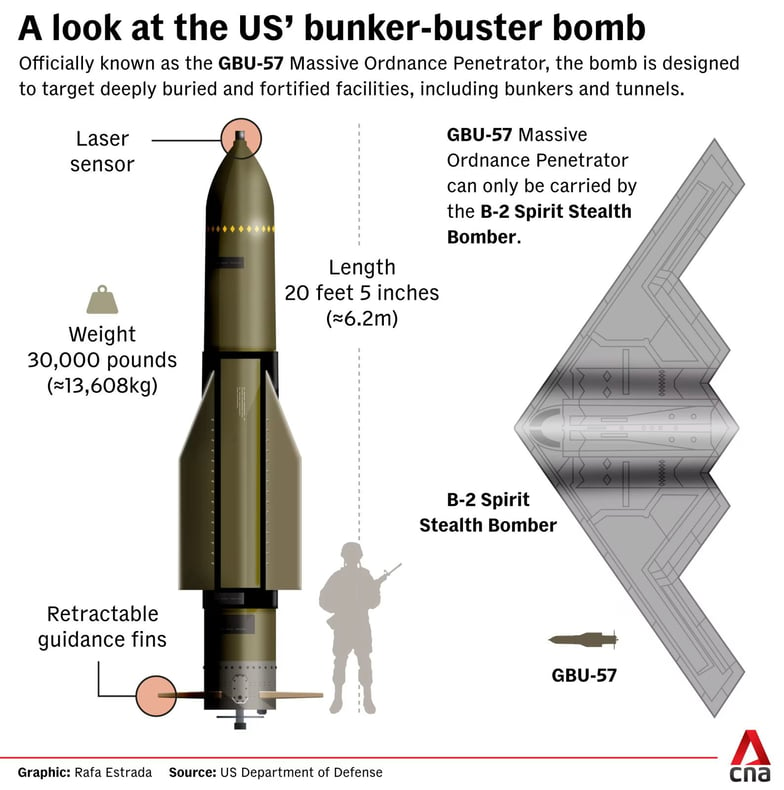
Iran's fighters did not fly, and it appears that Iran's surface to air missile systems did not see us. Throughout the mission, we retained the element of surprise. In total, U.S. forces employed approximately 75 precision guided weapons during this operation. This included, like the president stated last night, 14 30,000-pound GBU-57 Massive Ordnance Penetrators, marking the first ever operational use of this weapon.
I know that battle damage is of great interest. Final battle damage will take some time, but initial battle damage assessments indicate that all three sites sustained extremely severe damage and destruction. More than 125 U.S. aircraft participated in this mission, including B-2 stealth bombers, multiple flights of fourth and fifth generation fighters, dozens and dozens of air refueling tankers, a guided missile submarine, and a full array of intelligence, surveillance and reconnaissance aircraft, as well as hundreds of maintenance and operational professionals.
As the secretary said, this was the largest B-2 operational strike in U.S. history, and the second longest B-2 mission ever flown, exceeded only by those in the days following 9/11. Well prior to the strike, General Kurilla elevated force protection measures across the region, especially in Iraq, Syria and the Gulf. Our forces remain on high alert and are fully postured to respond to any Iranian retaliation or proxy attacks, which would be an incredibly poor choice. We will defend ourselves the safety of our service members and civilians remains our highest priority.
This mission demonstrates the unmatched reach coordination and capability of the United States military. In just a matter of weeks, this went from strategic planning to global execution. This operation underscores the unmatched capabilities and global reach of the United States military. As the president clearly said last night, no other in the military, no other military in the world, could have done this. I join the president and the secretary in being incredibly proud of the air crews, naval forces, cyber operators, planners and support teams and commanders who made this mission possible. It is their skill, discipline and teamwork that makes this operation possible. I am particularly proud of our discipline related to operational security, something that was of great concern to the president, the Secretary, General, Kurilla and me, and we will continue to focus on this. As we stand here this morning, many assets are still airborne, and we have hundreds deployed. I ask that we keep our war fighters on their way home and our deployed service member in our thoughts. Our joint force remains ready to defend the United States our troops and our interests in the region. Thank you very much.
SECRETARY HEGSETH: We'll take a few questions. Phil.
Q? So is regime change off the table, Mr. Secretary and to the chairman, you said the battle damage assessment is still ongoing, but do you believe that some nuclear capability in Iran remains?
SECRETARY HEGSETH: This mission was not and has not been about regime change. The president authorized a precision operation to neutralize the threats to our national interests posed by the Iranian nuclear program and the collective self-defense of our troops and our ally Israel.
GENERAL CAINE: Thanks for your question. I think BDA is still pending, and it would be way too early for me to comment on what may or may not still be there. But thanks for the question.
SECRETARY HEGSETH: Green. Green, no, behind you.
Q: Excuse me Mr. Secretary, can you tell me was there a particular moment when the president decided to pull the trigger on this operation where he said, now, president being, you know, something in the holster, now we're going to pull the trigger on.
SECRETARY HEGSETH: I would just say having the opportunity to witness his leadership, he was fully committed to the peace process. Wanted, wanted a negotiated outcome. Gave Iran every single opportunity, and unfortunately, was met by stonewalling, which is why he gave them plenty of time to continue to come to the table and give up enrichment, give up the nuclear program.
But there was a, I won't say, the particular moment. There was certainly a moment in time. A moment in time where he realized that it had to be a certain action taken in order to minimize the threat to us and our troops.
Q: General, you say that General Kurilla increased force protection in Iraq, Syria and Gulf in those areas. Were they given any advance warning the attacks were coming? And also, Mr. Secretary, when were congressional leaders notified? How long before the attacks took place?
GENERAL CAINE: Sir, to your first question. You know, the risk has clearly been rising over the last few weeks in the region, based on that and not a particular awareness of this operation, we've made smart decisions to minimize the risk to U.S. forces in the region.
Q: So there was no advance warning?
GENERAL CAINE: No sir
Q: Inaudible
SECRETARY HEGSETH: They (Congress) they were notified after the planes were safely out. What we complied with the notification requirements of the War Powers Act.
Q; They were notified.
SECRETARY HEGSETH: They were immediately thereafter. Yes.
Q: Thank you. Mr. Secretary, two questions, do you believe you completely destroyed Iranian nuclear program (sic)? And how about Iranian ballistic missiles? Your ally Israel always saying that is biggest threat (sic). And second question is very important, what will be your next step if Iran or militias under Iranian influence in the region attack us interests or allies in the region?
SECRETARY HEGSETH: And you can chime in on this too, Mr. Chairman, the battle damage assessment is ongoing. But our initial assessment, as the Chairman said, is that all of our precision munitions struck where we wanted them to strike and had the desired effect, which means especially in Fordow, which was the primary target here. We believe we achieved destruction of capabilities there. Ultimately, wherever it may be, whether it's in Iraq or Syria or bases in the Gulf, as the president said it would be, or excuse me, as the Chairman said it would be a very bad idea for Iran or its proxies to attempt to Attack American forces.
Q: Yes. Thank you, Mr. Secretary regarding retaliation, Iran and North Korea are cooperating on nuclear and missile development. Do you think there is a possibility that Iran, North Korea and other forces such as China will join forces to retaliate against the United States.
SECRETARY HEGSETH: Well, unfortunately, because of the policies under the previous administration, we drove those countries together, and ultimately that creates a challenging environment. For this particular operation, the focus is on Iran and Iranian nuclear capabilities. That's our focus here is to not just say that they can't have, but President Trump has said, from over 20 years frankly, Iran cannot have a nuclear weapon, and ultimately he decided this is the moment, given their stonewalling, when direct military action had to be taken to prevent that from happening.
Yes.
Q: Thank you very much. General Cain, I understand OpSec, I respect OpSec. Can you say at all what security procedures are being taken to protect U.S. troops in Iraq and elsewhere in the Middle East. And Secretary Hegseth, as a global war on terrorism veteran, what do you say to veterans who may be concerned the U.S. is getting into another open-ended war in the Middle East over weapons of mass destruction?
GENERAL CAINE: Thanks, sir for the question. I won't comment on what force protection measures are being taken in the region. What I will say is we're being proactive and not reactive and being very thoughtful about ensuring that we do all that we can to protect our forces out there.
SECRETARY HEGSETH: And I would just say, as the president has directed and made clear, this is most certainly not open ended. It doesn't mean it limits our ability to respond. We will respond if necessary. The most powerful military in the world is postured and prepared to defend our people. But what the president gave us, as I said, was a focused, powerful and clear mission on the destruction of Iranian nuclear capabilities. Those were the targets. That's what was struck. That was overwhelming. That's what was overwhelming. That's what the Iranian regime needs to understand. As the president put it out, put out last night, he wants peace. There needs to be a negotiated settlement here. We ultimately demonstrated that Iran cannot have a nuclear capability. That is a very clear mission set on this operation.
Yes. Hold on, yes, right there.
Q: Thank you, Mr. Secretary. Question for the secretary and the chairman. How is this strike coordinated with the Israelis on a strategic level, militarily and on a tactical level? Was there any direct Israeli military participation in this operation?
SECRETARY HEGSETH: Well, I would say certainly Israel had an incredible military success, especially at the beginning and ongoing, in degrading Iranian capabilities, degrading Iranian launchers, MRBMs (medium-range ballistic missiles), it's been incredible to watch what our ally Israel has been able to do. And there certainly have been conversations. I mean, General Kurilla at CENTCOM has worked closely in the defense of Israel for many years, and part of this operation was the defense of Israel and the ongoing defense of Israel. But as it pertains to this strike, this was U.S. operated, and U.S. led.
GENERAL CAINE: We took advantage of some of the preparatory work that's been done over the past week and a half in terms of axis of approach. I won't get into the particulars, but as the secretary said, it was a U.S. strike. We made sure we were not in the same piece of airspace and sky. Aside from that, that was the extent of it.
SECRETARY HEGSETH: We'll take a couple more. Yeah, right there.
Q: Question Mr. Secretary. First, are you concerned whatsoever now about the reaction from U.S. allies given the strike, particularly those in the Gulf and to the chairman, if I may, I understand you don't want to speak to specific assets, force protection measures, but do you anticipate at least having to bring in any further assets from other feeders to aid and force protection over the coming days?
SECRETARY HEGSETH: We certainly understand the challenges of allies in the region, and we have been respectful and in working in collaboration with them as it pertains to basing and sensitivities there. Ultimately, they've got a lot of assets and people in those locations also where American troops are co-located. So that's a consideration of ours. We've been in close consultation with them, and we appreciate the support that we have gotten.
GENERAL CAINE: Thanks for the question on sort of the global picture, and as you know, that's one of my jobs, is to look globally at the entire range of challenges. We are always carefully considering our force posture around the world and then offering options to the secretary and to the president. I won't comment on any future things, but the American people should know that we carefully consider those moves around the world and try to modulate, as needed, our force structure in the region.
Thank you. What communications are being sent to the Iranians right now? And is there any possibility of diplomacy now or in the coming days?
SECRETARY HEGSETH: I can, I can only confirm that there are both public and private messages being directly delivered to the Iranians in multiple channels giving them every opportunity to come to the table. They understand precisely what the American position is, precisely what steps they can take to allow for peace, and we hope they do so.
Q: The President may not want an open-ended conflict. The Iranians may disagree. Are you prepared for a protracted war?
SECRETARY HEGSETH Well, anything can happen in conflict, we acknowledge that, but the scope of this was intentionally limited. That's the message that we're sending with the capabilities of the American military nearly unlimited. So Iran, in that sense, has a choice, but we've made it very clear to them, this is nuclear sites. This is nuclear capabilities. This is the line that the president set, and we set that back. Now is the time to come forward for peace, but we…I think one of the takeaways from this as well is the unprecedented level of ongoing cooperation. I can't speak highly enough of the chairman and his staff and General Kurilla in CENTCOM, what they've done to look around the corner to pre-position, to understand how an operation like this comes together. The scope and scale of what occurred last night would take the breath away of almost any American if you had an opportunity to watch it in real time.
And I think Tehran is certainly calculating the reality that planes flew from the middle of America and Missouri overnight, completely undetected over three of their most highly sensitive sites, and we were able to destroy nuclear capabilities. And our boys in those bombers are on their way home right now. We believe that will have a clear psychological impact on how they view the future, and we certainly hope they take the path of negotiated peace.
But I could not be more proud of how this building operated, of the precision, the sensitivity and the professionalism of the troops involved in this effort.
I will take one more we'll take one more question. Yes, right there.
Q: Thank you, Mr. Secretary, concerning the justification for these strikes, in March, the Office of the Director of National Intelligence released their threat assessment concluded, quote, Iran is not building a nuclear weapon, and Khomeini has not authorized the nuclear programs he suspended in 2003 unquote. So what new intelligence does the US have since then that the Iranians have changed their position on nuclear weapons, and does this new intelligence come from U.S. sources and methods, or are we getting this information from other countries?
SECRETARY HEGSETH : Well, I would just simply say that the President's made it very clear he's looked at all of this, all of the intelligence, all the information, and come to the conclusion that the Iranian nuclear program is a threat, and was willing to take this precision operation to neutralize that threat in order to advance American national interests, reduce the Iranian nuclear program and obviously collective self-defense of ourself and our allies. So he looked at all of it, understood the nature of the threat, and took bold action I think the American people would expect in a commander in chief.
That's all we've got. Thank you very much. Appreciate it.
Source : DOD Press Briefing, 22 June
New details from Gen. Dan Caine, Chairman of the Joint Chiefs of Staff, on Operation "Midnight Hammer" • On Friday, a large B-2 strike package launched from the continental U.S. To maintain tactical surprise, part of the package proceeded west into the Pacific as a decoy/deception effort. • The main strike package, comprised of 7x B-2 Spirit bombers, flew east undetected. More than 125 total U.S. aircraft participated, employing 75+ precision-guided munitions. • At ~5pm ET, just prior to the strike package entering Iran, a U.S. submarine in CENTCOM launched more than two dozen Tomahawk land attack cruise missiles against key surface infrastructure targets. • At ~6:40 PM ET, the lead B-2 dropped two GBU-57 Massive Ordnance Penetrator (MOP) weapons on the first of several aim points at Fordo. The remaining bombers then hit their targets, with 14 MOPs dropped against 2 nuclear target areas. • All three Iranian nuclear infrastructure targets were struck between 6:40 PM and 7:05 PM Eastern time, with the tomahawk missiles last. • As the strike package entered Iranian airspace, the U.S. employed several deception tactics, including decoys as 4th and 5th-gen aircraft pushed out in front, sweeping for enemy fighters and surface-to-air missile threats. • Final battle damage will take some time, but initial battle damage assessments indicate that all three sites sustained extremely severe damage and destruction. • Currently unaware of any shots fired at the strike package on the way in or out. Iran's fighters did not fly, and it appears that Iran's surface-to-air missile systems did not see use throughout the mission. Following weapons release, the package exited Iranian airspace and began its return home. • The strike package was supported by U.S. Strategic Command, U.S. Transportation Command, U.S. Cyber Command, U.S. Space Command, U.S. Space Force, and U.S. European Command.
Traduction :
Nouveaux détails du général Dan Caine, chef d'état-major interarmées, sur l'opération « Midnight Hammer » • Vendredi, un important dispositif d'attaque B-2 a été lancé depuis le continent américain. Pour maintenir la surprise tactique, une partie du dispositif s'est dirigée vers l'ouest, dans le Pacifique, comme leurre/effort de tromperie. • Le principal dispositif d'attaque, composé de sept bombardiers B-2 Spirit, a volé vers l'est sans être détecté. Plus de 125 avions américains y ont participé, utilisant plus de 75 munitions guidées avec précision. • Vers 17 heures HE, juste avant que le groupe de frappe n'entre en Iran, un sous-marin américain du CENTCOM a lancé plus de deux douzaines de missiles de croisière d'attaque terrestre Tomahawk contre des cibles d'infrastructures de surface clés. • Vers 18h40 HE, le B-2 de tête a largué deux bombes à pénétration massive (MOP) GBU-57 sur le premier de plusieurs points visés à Fordo. Les bombardiers restants ont ensuite atteint leurs cibles, avec 14 MOP largués sur deux zones nucléaires. • Les trois cibles de l'infrastructure nucléaire iranienne ont été frappées entre 18h40 et 19h05, heure de l'Est, les missiles Tomahawk étant les derniers à avoir été touchés. • Alors que le groupe de frappe entrait dans l'espace aérien iranien, les États-Unis ont employé plusieurs tactiques de tromperie, notamment des leurres tandis que les avions de 4e et 5e générations avançaient en avant, recherchant les chasseurs ennemis et les menaces de missiles sol-air. • Les dommages finaux de la bataille prendront un certain temps, mais les premières évaluations des dommages de la bataille indiquent que les trois sites ont subi des dommages et des destructions extrêmement graves. • À ce jour, aucun coup de feu n'a été tiré sur le convoi à l'aller comme au retour. Les chasseurs iraniens n'ont pas volé et il semble que les systèmes de missiles sol-air iraniens n'aient pas été utilisés tout au long de la mission. Après le largage des armes, le convoi a quitté l'espace aérien iranien et a entamé son retour. • Le plan de frappe a été soutenu par le Commandement stratégique américain, le Commandement des transports américain, le Commandement cybernétique américain, le Commandement spatial américain, la Force spatiale américaine et le Commandement européen américain.
USAF B-2 Spirit bombers returned to Whiteman AFB following a 36-hour nonstop flight from CONUS to Iran & back. Op. Midnight Hammer was the largest operational B-2 strike in U.S. history & 2nd-longest mission ever. Landing 60,000+ lbs lighter.
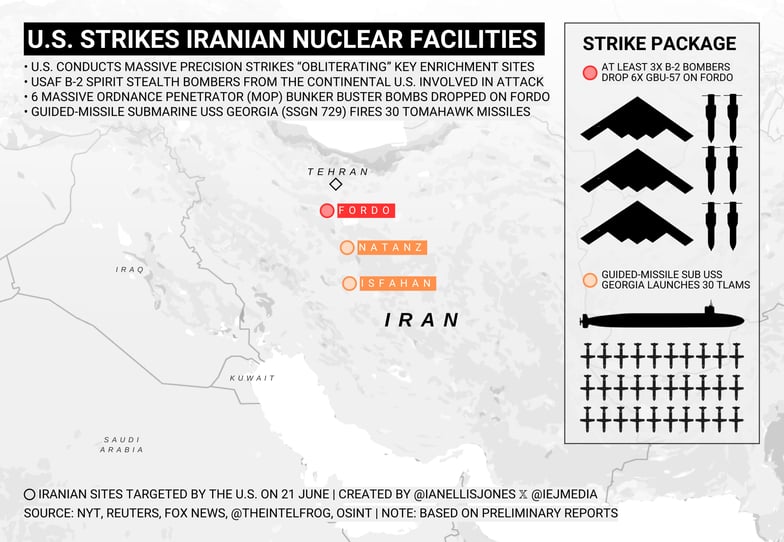
https://www.airandspaceforces.com/us-strikes-iranian-nuclear-facilities-b-2-bombers-cruise-missiles/

The U.S. military struck three Iranian nuclear sites in the early hours of June 22 local time in Operation Midnight Hammer, intended to shut down Iran’s nuclear program and not harm the country’s leadership. The Trump administration said the damage would substantially delay Iran’s ability to produce a nuclear weapon. But Gen. Dan Caine, Chairman of the Joint Chiefs, said the Pentagon was still awaiting a definitive battle damage assessment.
https://podcasts.lemonde.fr/lheure-du-monde/202506221749-frappes-americaines-sur-liran-une-bascule-historique#origin=podcast_homeLe dernier communiqué de l’AIEA
L’histoire des bombes.
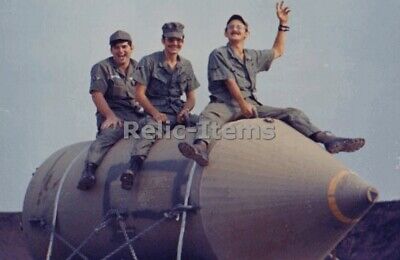
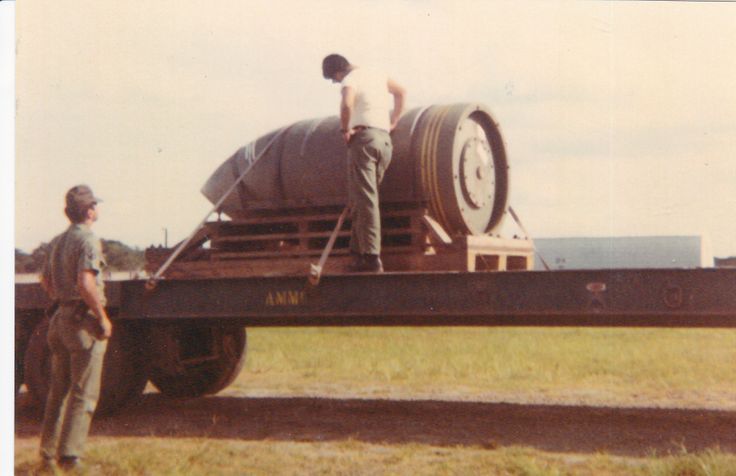
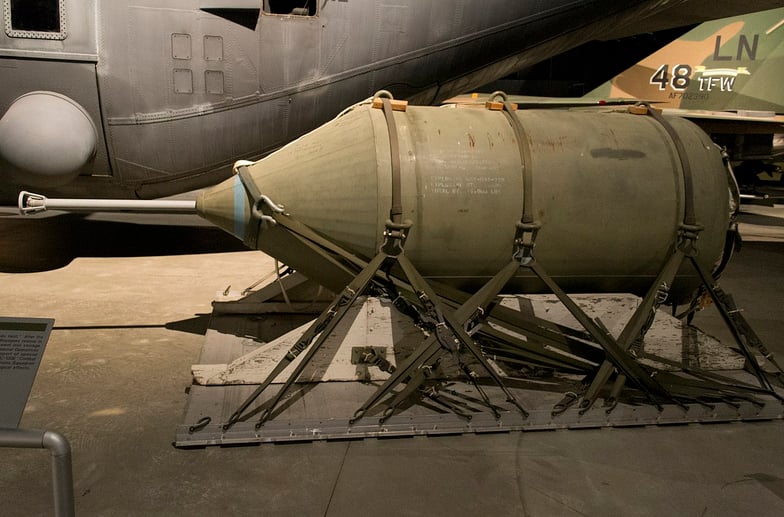
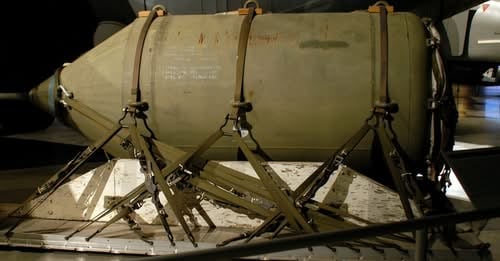
BLU-82B/C-130 dite Daisy Cutter Bomb. Qui aurait dû contribuer à gagner la guerre du Vietnam. Parachutée d'un C 130, MC 130, CH-54 tarhe, 6800 kg. 1ere utilisation Vietnam 23 mars 1970. Défrichait mais tuait aussi. Ancêtre de la GBU-57, dite bombe pénétrante.
Publication dans Le Monde le 24 juin 2025 de la chronique de Olivier Faye sur l’histoire de l’avion B.2.