Décision du juge Fred Biery de libérer Liam, Par Vincent Ricouleau, Professeur de droit.
Voici la décision du juge Fred Biery de libérer Liam et son père, arrêtés par l'ICE, sous les caméras. Cela a été une étape décisive dans la prise de conscience des pouvoirs exorbitants de cette police-milice avec des risques de remise en question des libertés civiques.


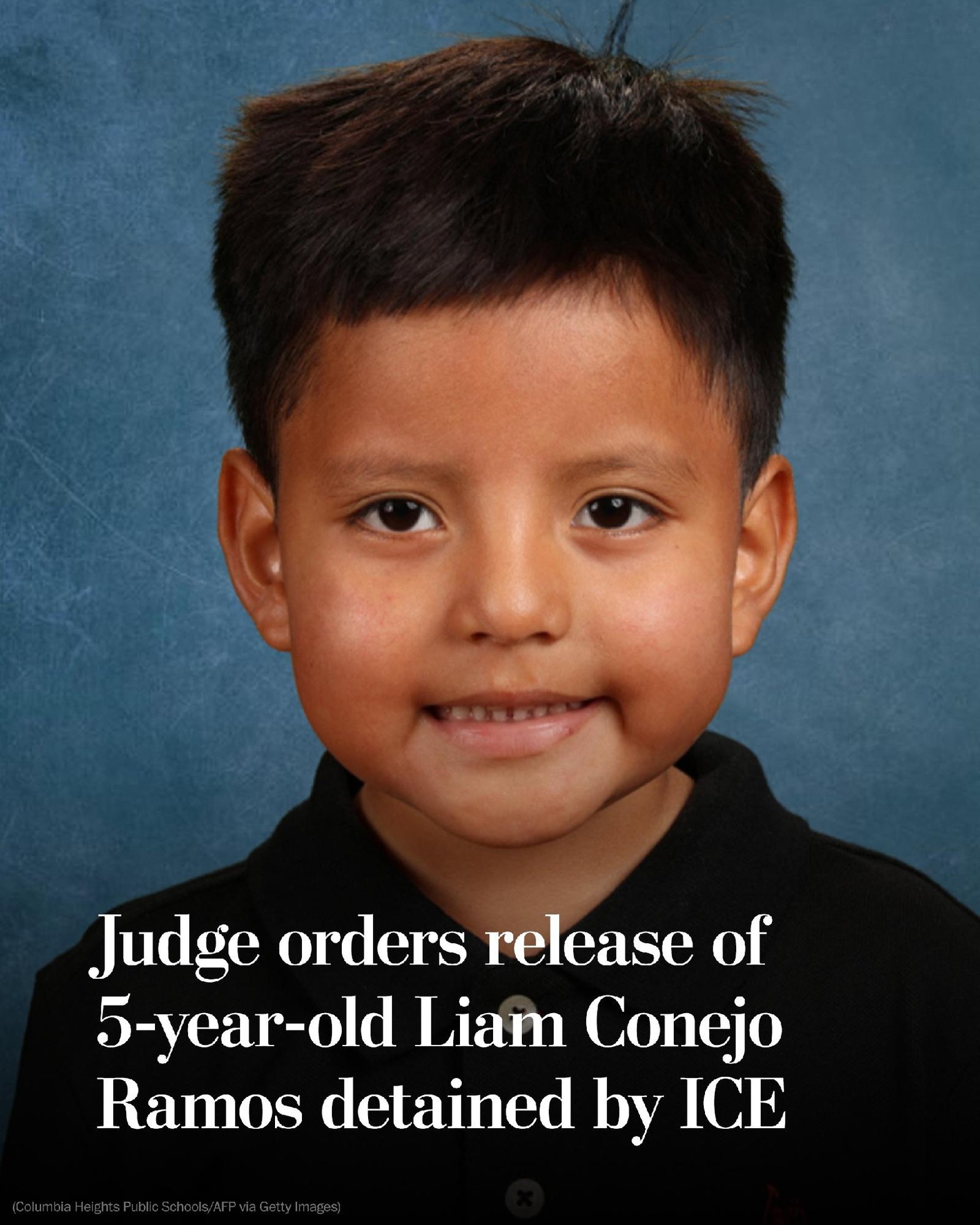

Voici la décision du 31 janvier 2026.
IN THE UNITED STATES DISTRICT COURT FOR THE WESTERN DISTRICT OF TEXAS SAN ANTONIO DIVISION
ADRIAN CONEJO ARIAS, and L.C.R., a Minor Child by and through His Parent and Guardian Adrian Conejo Arias, Petitioners
VS. CIVIL CASE NO. SA-26-CV-415-FB KRISTI NOEM, in Her Official Capacity as Secretary of the United States Department of Homeland Security; PAMELA BONDI, in Her Official Capacity as Attorney General of the United States; TODD LYONS, in His Official Capacity as Acting Director, United States Immigration and Customs Enforcement; DAREN MARGOLIN, in His Official Capacity as Acting Director of the Executive Office of mmigration Review; and JOHN DOE, in His Official Capacity as the Warden of the Dilley Immigration Processing Center in Dilley, Texas, Respondents
OPINION AND ORDER OF THE COURT
Before the Court is the petition of asylum seeker Adrian Conejo Arias and his five-year-old son for protection of the Great Writ (1) of habeas corpus. They seek nothing more than some modicum of due process and the rule of law. The government has responded.
The case has its genesis in the ill-conceived and incompetently-implemented government pursuit of daily deportation quotas, apparently even if it requires traumatizing children. This Court and others regularly send undocumented people to prison and orders them deported but do so by proper legal procedures.
(1) Ex parte Bollman, 8 U.S. (4 Cranch) 75 (1807); Sir William W. Blackstone, Commentaries on the Laws of England (1765-1769); see also Magna Carta, Article 39.
Apparent also is the government's ignorance of an American historical document called the Declaration of Independence. Thirty-three-year-old Thomas Jefferson enumerated grievances against a would-be authoritarian king over our nascent nation. Among others were:
"He has sent hither Swarms of Officers to harass our People."
"He has excited domestic Insurrection among us.”
For quartering large Bodies of Armed Troops among us."
"He has kept among us, in Times of Peace, Standing Armies without the consent
of our Legislatures."
"We the people" are hearing echos of that history.
And then there is that pesky inconvenience called the Fourth Amendment:
The right of the people to be secure in their persons, houses, papers, and effects, against
unreasonable searches and seizures, shall not be violated, and no Warrants shall issue,
but upon probable cause, supported by Oath or affirmation, and particularly describing
the place to be searched, and persons or things to be seized.
U.S. CONST. amend. IV.
Civics lesson to the government: Administrative warrants issued by the executive branch to
itself do not pass probable cause muster. That is called the fox guarding the henhouse.
The Constitution requires an independent judicial officer.
Accordingly, the Court finds that the Constitution of these United States trumps this administration's detention of petitioner Adrian Conejo Arias and his minor son, L.C.R. The Great Writ and release from detention are GRANTED pursuant to the attached Judgment.
Observing human behavior confirms that for some among us, the perfidious lust for unbridled power and the imposition of cruelty in its quest know no bounds and are bereft of human decency. And the rule of law be damned.
Ultimately, Petitioners may, because of the arcane United States immigration system, return to their home country, involuntarily or by self-deportation. But that result should occur through a more orderly and humane policy than currently in place.
Philadelphia, September 17, 1787: "Well, Dr. Franklin, what do we have?" "A republic, if you can keep it."
With a judicial finger in the constitutional dike,
It is so ORDERED.
SIGNED this 31st day of February, 2026.
_________________________________________________
FRED BIERY / UNITED STATES DISTRICT JUDGE
Quelques observations :
Le juge commence par citer the Great Writ (1) of habeas corpus. Avec un rappel de référence “Ex parte Bollman, 8 U.S. (4 Cranch) 75 (1807); Sir William W. Blackstone, Commentaries on the Laws of England (1765-1769); see also Magna Carta, Article 39”.
Voici les explications du Brennan Center concernant ce texte fondateur.
https://www.brennancenter.org/our-work/research-reports/habeas-corpus-explained
Le juge cingle le gouvernement en invoquant son ignorance de la Déclaration d’indépendance. Il rappelle les déclarations de Thomas Jefferson, âgé de 33 ans, lequel, empreint de sa jeunesse mais n’empêchant nullement sa clairvoyance et sa maturité politique. Les quatre citations, à l’allure et au poids de versets, s’adressent à Donald Trump et à son administration.
Apparent also is the government's ignorance of an American historical document called the Declaration of Independence. Thirty-three-year-old Thomas Jefferson enumerated grievances against a would-be authoritarian king over our nascent nation. Among others were :
“Il a envoyé ici des hordes d'officiers pour harceler notre peuple.”
“l a fomenté une insurrection intérieure parmi nous.”
“Pour avoir cantonné d'importants corps de troupes armées parmi nous.”
“Il a maintenu parmi nous, en temps de paix, des armées permanentes sans le consentement
de nos assemblées législatives.”
"He has sent hither Swarms of Officers to harass our People."
"He has excited domestic Insurrection among us.”
For quartering large Bodies of Armed Troops among us."
"He has kept among us, in Times of Peace, Standing Armies without the consent of our Legislatures."
"We the people" are hearing echos of that history.
Le juge rappelle le Quatrième amendement. “ “The right of the people to be secure in their persons, houses, papers, and effects, against unreasonable searches and seizures, shall not be violated, and no Warrants shall issue, but upon probable cause, supported by Oath or affirmation, and particularly describing the place to be searched, and the persons or things to be seized.”
Ce Quatrième amendement est cité intégralement par le juge.
And then there is that pesky inconvenience called the Fourth Amendment:
The right of the people to be secure in their persons, houses, papers, and effects, against
unreasonable searches and seizures, shall not be violated, and no Warrants shall issue,
but upon probable cause, supported by Oath or affirmation, and particularly describing
the place to be searched, and persons or things to be seized.
Le juge donne une leçon de civisme pour le gouvernement : les mandats administratifs émis par le pouvoir exécutif à son propre profit ne sont pas fondés sur des preuves suffisantes. Ce serait plutôt une leçon de droit. On retourne sur le terrain de la preuve. Le juge précise bien le statut de demandeurs d’asile des requérants. C’est confier la garde du poulailler au renard, dit le juge. Autrement dit, les autorités chargées de faire respecter la loi, la violent. La Constitution exige un juge indépendant. L’application de la Constitution et the Great Whit font que la détention doit cesser.
“Civics lesson to the government: Administrative warrants issued by the executive branch to
itself do not pass probable cause muster. That is called the fox guarding the henhouse.
The Constitution requires an independent judicial officer.
Accordingly, the Court finds that the Constitution of these United States trumps this administration's detention of petitioner Adrian Conejo Arias and his minor son, L.C.R. The Great Writ and release from detention are GRANTED pursuant to the attached”.
Le juge précise que les requérants peuvent en raison du système d’immigration complexe (the arcane United States immigration system), retourner chez eux, de leur plein gré ou non. Mais cela nécessite une politique plus ordonnée et plus humaine que celle actuellement en vigueur. Le juge cite une réplique, ayant eu lieu à Philadelphie, le 17 septembre 1787. “Eh bien, Docteur Franklin, qu’avons-nous ? Une république, si vous pouvez la conserver. Avec une surveillance judiciaire sur le rempart que forme le corpus constitutionnel.
“Ultimately, Petitioners may, because of the arcane United States immigration system, return to rettheir home country, involuntarily or by self-deportation. But that result should occur through a moreorderly and humane policy than currently in place.Philadelphia, September 17, 1787: "Well, Dr. Franklin, what do we have?" "A republic, if youcan keep it."With a judicial finger in the constitutional dike,It is so ordererd and signed.”
Le lien vers le jugement :
https://edition.cnn.com/2026/01/31/us/liam-ramos-judge-order
Droit, histoire, géopolitique en Asie et ailleurs
Droit, histoire, géopolitique en Asie et ailleurs